Ink-elonium
»Review«
Even the title is a trap dressed up as a door. The name—borrowed from the “Ynkelonium” of the Perry Rhodan series and chosen for its sonic kinship alone, a “Y” swapped for an “I”—carries in the same breath the English word ink, the very medium in which the underlying work was made. Accident and condensation at once: less decoration than method.
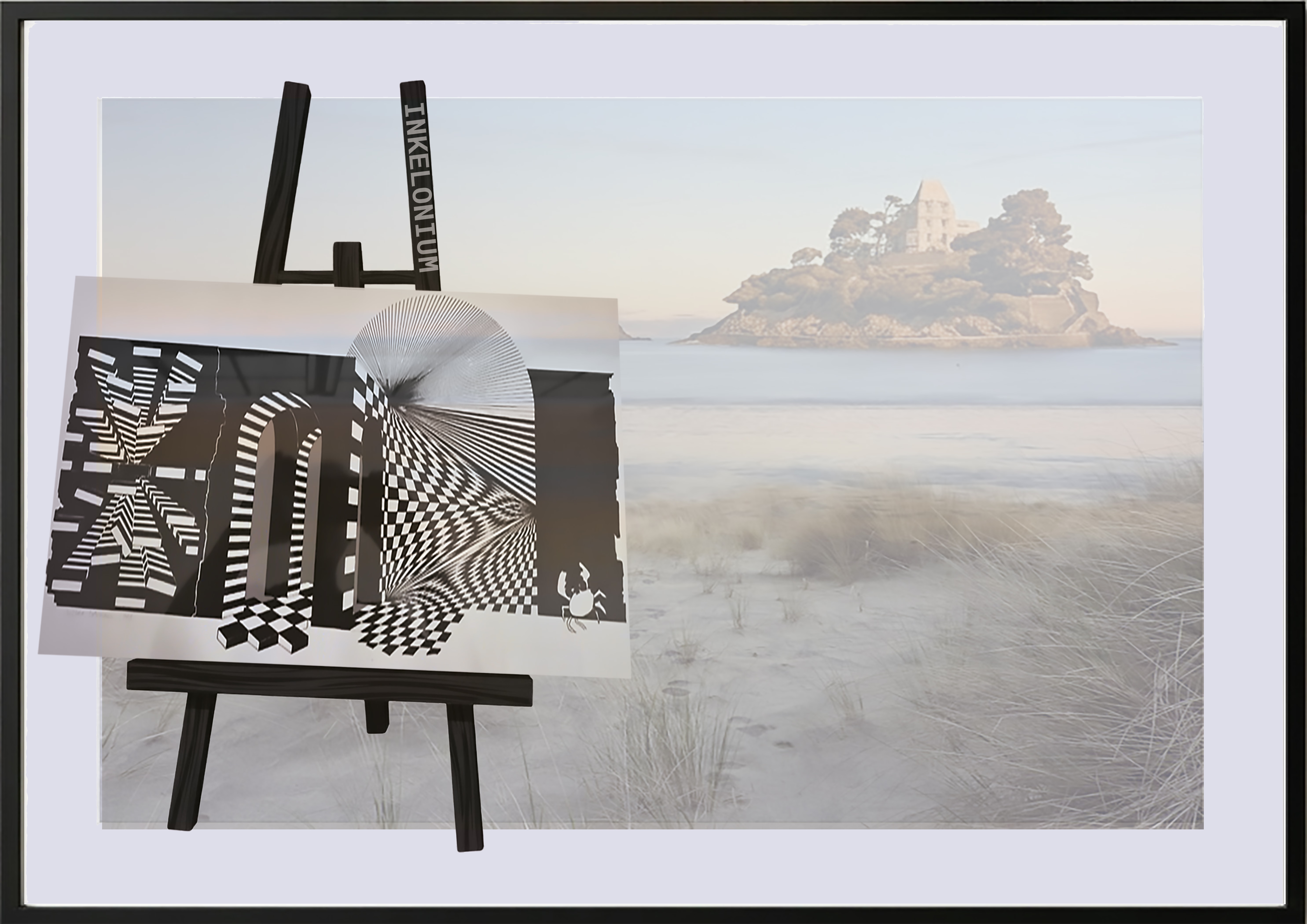
The work draws on the 1993 ink drawing “French Vacation,” made in Le Plessix, Dinard—a place that embodies more than a decade of vacation time shared with C. Yet memory is no exact recording; it is reassembled anew with each recall—filtered, distorted, sometimes invented.
Here lies the first level of transformation: memory is already a deformation before the first stroke is laid down. On the level of the image, the transformation is pushed further on purpose—the headland “Pointe de Moulinet” becomes an island set out in the sea, the beach “L’Écluse” a landscape of dunes. This deformation follows the Escher-like logic in which spaces fold into one another and the eye can find no solid footing. Yet this second level of transformation is not subject to the whims of unchecked imagination—even if the work was made neither at an easel nor with a 2 mm drawing pen on canvas: so, no over-interpretation.
What remains is an image that disappoints the expectations it raised. “Ink-elonium” is a “picture-within-a-picture mini-matryoshka” or a “spot-the-difference puzzle”—something you don’t read but search, never quite sure whether what you find was ever there or only came into being in the searching. “Ink-elonium” gives no answer to what really happened in Dinard—not knowing is the more honest form.