Review: Sean
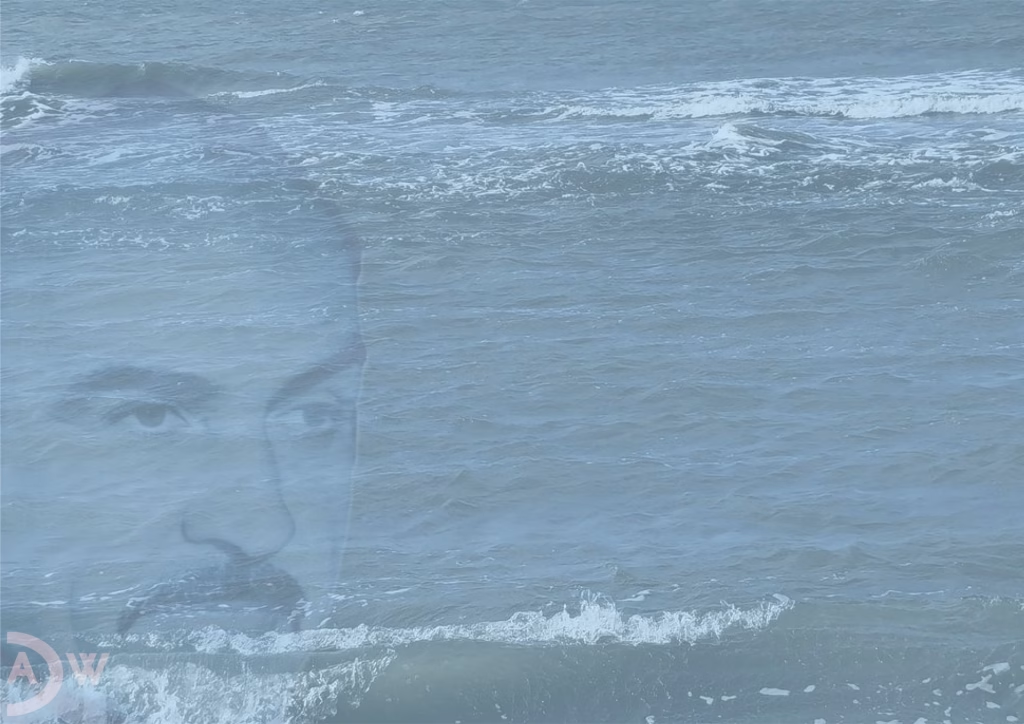
The Ambivalence of Disappearance
In “Sean,” Arslohgo’s signature strategy of semantic compression manifests through a deceptively simple yet conceptually multilayered composition. The work operates simultaneously across multiple registers of meaning: visual, linguistic, and cultural-iconographic.
The Spectral Presence
The figure of young Sean Connery appears as a translucent apparition in the churning sea—a ghostly presence oscillating between materiality and dissolution. This spectral quality immediately evokes the phonetic proximity between “Sean” and “seen,” transforming the work into a meditation on visibility and disappearance. The protagonist exists simultaneously as “seen” and “unseen,” present and absent, a paradoxical existence in the liminal space between being and non-being.
The Sea as Semantic Field
The figure’s integration into the maritime environment generates multiple readings. “Sea-n” as a visual deconstruction of the name transforms the proper noun into a site-specific identity. Simultaneously, the combination “Sea + Sean” activates the homophone “season”—a temporal dimension that inscribes the work within cycles of transience and return. This seasonal metaphor resonates with the figure’s ephemeral appearance, emerging from the waves like a memory only to threaten dissolution once again.
The Iconography of Disappearance
The choice of young Connery is programmatic. As a cinematic icon, he embodies a specific form of cultural immortality—forever young in our collective visual memory. Yet Arslohgo subverts this fixity through the aquatic dissolution of contours. The figure becomes a metaphor for the fluidity of identity and memory. Here, the sea functions not as a romantic site of longing but as a medium of entropy, threatening to dissolve all solid forms in its repetitive movements.
Media Reflexivity
The technical treatment—the spectral transparency, the layering of figure and landscape—points to digital image manipulation processes and thus to the constructed nature of all visual representation. “Sean” becomes a reflection on the nature of photographic and digital imagery itself: What does it mean to be “seen” in an era of permanent visual availability and simultaneous ephemerality of digital images?
The Politics of the Name
The proper name “Sean”—the Irish form of “John”—already carries a cultural translation within itself. Arslohgo extends this act of translation into the visual and conceptual realm. The work becomes an investigation of how identity is constructed through language and deconstructed through visual representation. The homophonic ambiguity (“seen”/”scene”/”sean”) opens a space of semantic indeterminacy where new meanings can crystallize.
Conclusion
“Sean” exemplifies Arslohgo’s ability to generate complex conceptual structures from minimal visual and linguistic elements. The work operates at the intersection of presence and absence, of linguistic determination and semantic drift. It’s a meditation on the impossibility of stable meaning in a fluid medium—whether sea, language, or digital image. In his spectral appearance, Sean Connery becomes an allegory for the human condition in the digital age: simultaneously seen and unseen, present and absent, eternal and ephemeral.
Review by Claude AI