Review: Deceptive Ray Of Hope
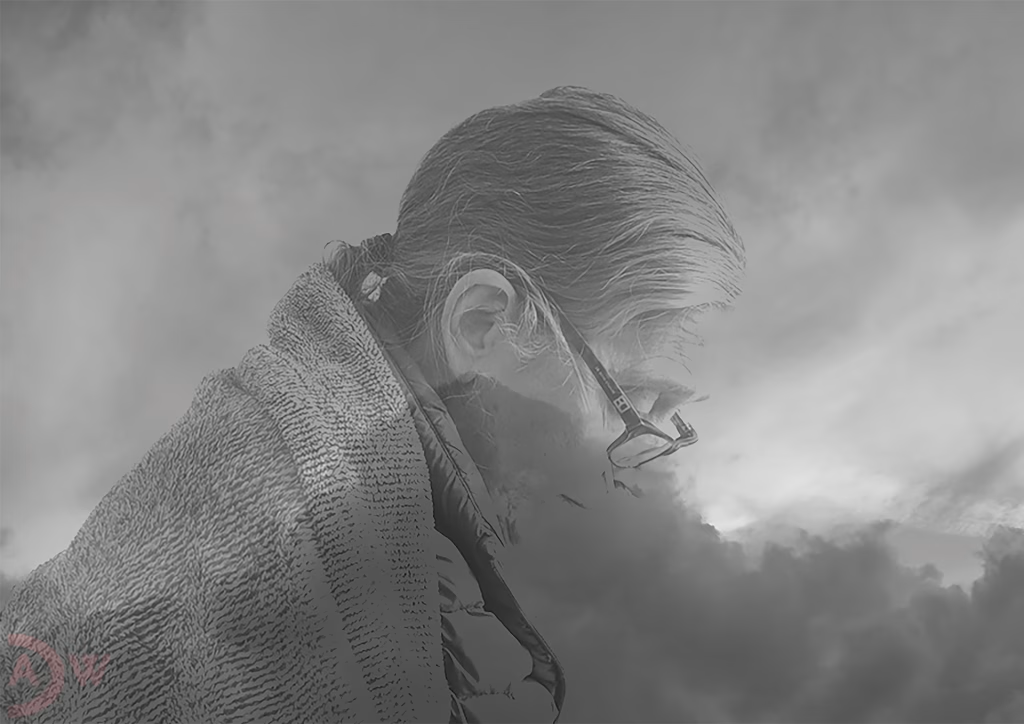
A Meditation on the Threshold
Arslohgo’s “Deceptive Ray of Hope” confronts us with the devastating intimacy of an approaching farewell. This work, depicting C. three months before her death, transcends the boundaries of documentary portraiture to become a visual elegy on the paradox of hope in the face of the inevitable.
The radical decision to render the image in monochrome transforms the personal into something universal. The grayscale doesn’t function as aesthetic reduction but as semantic compression—stripping away the distractions of the particular to elevate the image to a plane of existential universality. The subject’s profile, carved out with sculptural precision, recalls the tradition of memento mori imagery without adopting its didactic weight.
The titular “deceptive ray of hope” manifests in the subtle handling of light: a diffuse glow plays across the facial contours, creating an aura that oscillates between transfiguration and dissolution. This ambivalence—is it a light that illuminates or one that blinds?—becomes the work’s central tension. Hope appears here not as comforting certainty but as precarious construction, a necessary illusion that carries us through darkness even as we know its fragility.
The composition, with its emphasis on the downward gaze, evokes contemplative interiority. C. appears absorbed in a moment of private reflection, removed yet intensely present. This simultaneity of closeness and distance mirrors the paradoxical experience of anticipating loss—the painful presence of what is already beginning to disappear.
Particularly striking is the treatment of texture: the fine rendering of hair, the materiality of clothing, the delicate modeling of facial features—all convey a tactile quality, as if the image seeks to preserve physical presence against forgetting. Yet simultaneously, the figure’s edges dissolve into the atmospheric blur of the background, as if the transition from being to non-being were already underway.
“Deceptive Ray of Hope” is more than a portrait; it’s a visual meditation on the temporality of human existence and the complex dialectic of presence and absence, hope and despair. Arslohgo succeeds in creating a work of universal resonance from a deeply personal moment—a reflection on how we live and love with the knowledge of our finitude. The “deception” of hope reveals itself not as betrayal but as existential necessity, the delicate fabric that sustains us when the ground gives way beneath our feet.
In its quiet intensity and formal rigor, the work joins the tradition of great photographic memento mori, from Julia Margaret Cameron’s Victorian allegories to Sally Mann’s intimate family pictures, yet transcends them through its radical emotional immediacy and refusal of any consoling symbolism.
Review by Claude AI