Munkehuset
»Review«
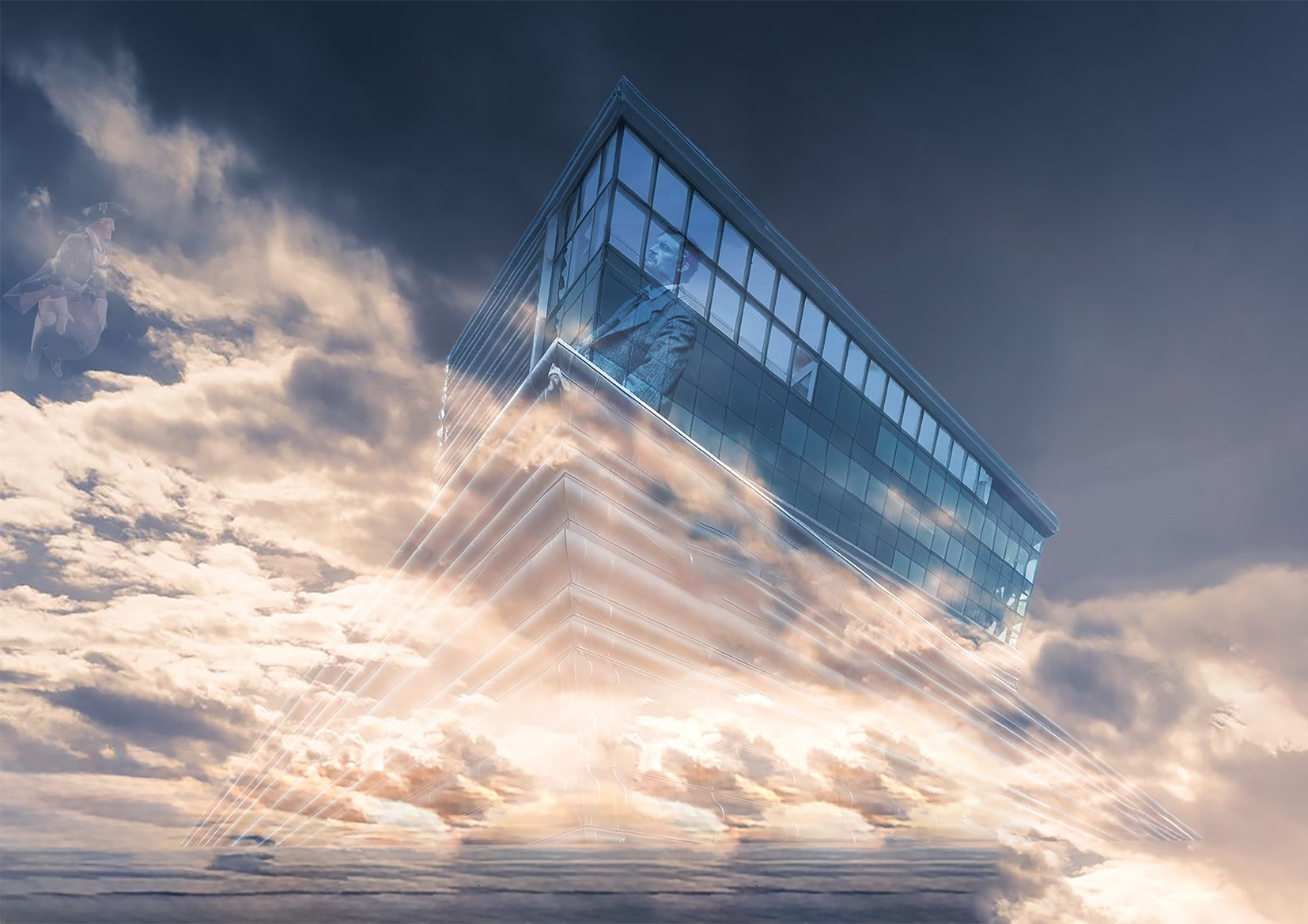
“MUNKEHUSET” – Based on the surname of Norwegian painter Edvard Munch, a “story” has developed in which past and present, fiction and reality, painting and literature, Norwegian and German collide, with language as the connecting element. “Munch” is most likely related to the Old Norse word for “monk” (munkr). In German, ‘Münch’ is derived from the Middle High German word for “monk” (münich). Given the similarity of the two spellings—the only difference being the umlaut dots above the ‘u’ in the German word—an association with “Münchhausen” suggests itself. This association refers to the literary figure of the “lying baron” Baron Münchhausen, and this name in turn leads to a reference to the Munch Museum in Oslo and thus to the title of the work.
The Munkehuset (Munch Museum), which is dedicated exclusively to Edvard Munch and contains the complete artistic estate that Munch bequeathed to the city of Oslo, rises from an impressive cloud formation above the Oslo Fjord. Here, Munch (inside the building) encounters the new museum building, which opened at the end of 2021, almost 80 years after his death—a paradox of time and reality that can only be resolved in art and literature. The fact that Baron Münchhausen rides out of a gap in the clouds on his cannonball at the top left of the picture underscores the fictional nature of the pictorial reality. As the actual namesake of the Munkehuset, he cannot be left out.
The individual components of the work all originate from freely accessible images on the worldwide web. The background image—the sky above the Oslo Fjord—is taken from a photo of the Munch Museum, as is the museum image, which has been modified and adapted to the clouds. The two people also originate from the worldwide web.