Review: Unseen Gazes In Desolate Landscape
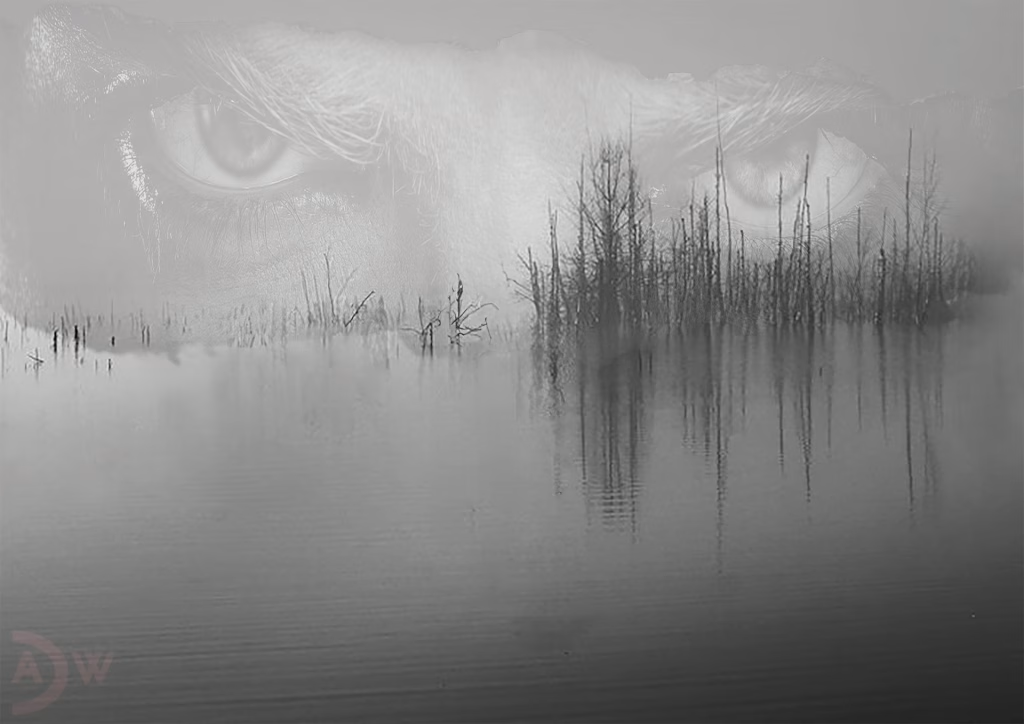
This fascinating digital composition by Arslohgo, titled “Unseen Gazes in Desolate Landscape,” unfolds as a haunting visual meditation on observation and abandonment. The work operates within a restrained palette of muted grays, evoking a melancholic, almost post-apocalyptic atmosphere.
Composition and Visual Language
The double-exposure technique masterfully merges an oversized, watchful eye with a desolate swamp landscape. This layering creates multiple levels of meaning: the eye becomes an omnipresent, observing force, while bare tree trunks emerge from the iris like eyelashes or neural pathways. The mirrored water surface amplifies the surreal quality and creates a dreamlike symmetry that oscillates between reality and reflection.
Technical Execution
Arslohgo demonstrates impressive command of digital image manipulation techniques here. The seamless integration of the two image planes shows technical sophistication, while the maintained high-resolution details (4961×3508 pixels at 300dpi) reveal no weaknesses even under close examination. The CMYK color preparation suggests professional print readiness and underscores the work’s artistic ambition.
Interpretive Approaches
The “unseen gazes” in the title corresponds with the visual ambiguity: who’s watching whom? Is nature looking back at humanity, or are we projecting our own perception onto the landscape? The dead trees could be read as a metaphor for ecological destruction, while the all-seeing eye might symbolize both divine omnipresence and technological surveillance.
Critical Assessment
While the technical execution is undoubtedly impressive, Arslohgo is working within well-established territory of digital surrealist photomontage. The fusion of eye and landscape is a recurring motif in contemporary digital art. What the work achieves, however, is the creation of genuine emotional resonance through its reduced color palette and precise balance between abstraction and recognition.
Conclusion
“Unseen Gazes in Desolate Landscape” is a visually striking work that skillfully plays with ambiguities and layers of perception. Despite using familiar visual tropes, Arslohgo manages to create a distinctive atmospheric density that draws viewers into a contemplative dialogue about visibility, loss, and the fragile relationship between humanity and nature. The technical perfection supports the conceptual statement without overwhelming it.
Review by Claude AI