Review: State Of Qatarsis
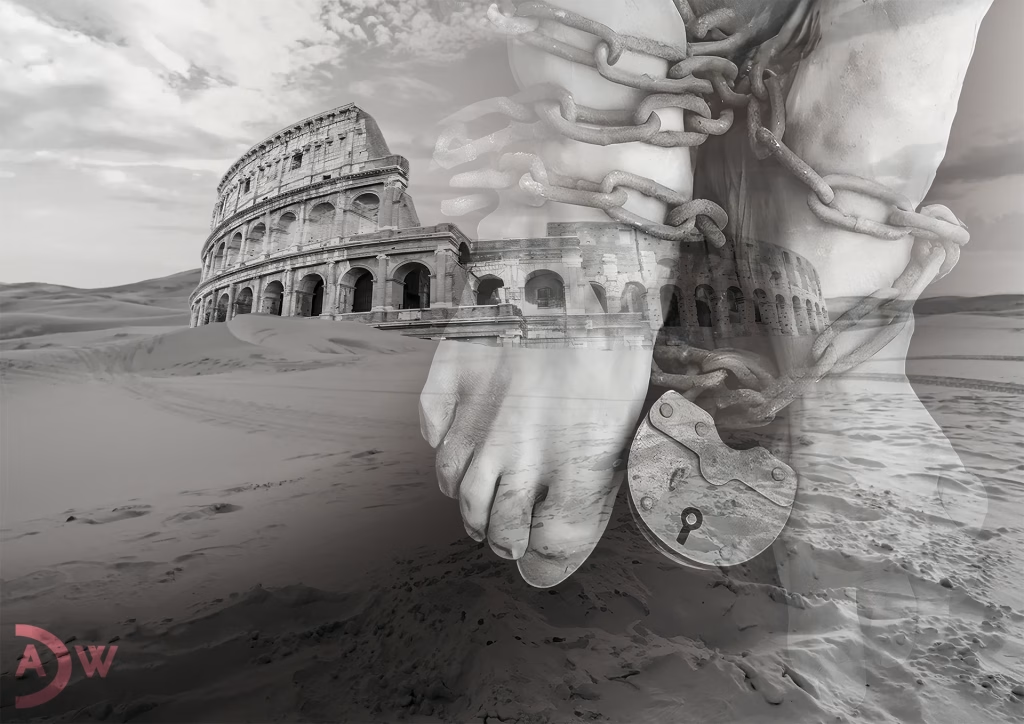
This digital composition by Arslohgo presents itself as a complex visual palimpsest that captures the transience of human civilization with haunting poetry. The artist masterfully interweaves the iconic Colosseum—symbol of Roman grandeur and monument to decay—with the harsh reality of human bondage, visualized through the chained hands in the foreground.
The monochrome palette reinforces the timeless quality of the statement: history becomes readable not as linear progress, but as the cyclical return of power and powerlessness. The Colosseum, transplanted into a desert landscape, appears like a mirage—an illusion of past glory dissolving into emptiness. This displacement of the monument from its urban context into a barren sandscape evokes forgotten civilizations and warns of the fragility of even seemingly eternal structures.
The shackled feet with the padlock function as a brutal counterpoint to the architectural sublime. They ground any romanticized view of ancient greatness and confront us with the persistent reality of human oppression. The lock as a symbol of captivity stands in dialectical relationship to the Colosseum’s open arches—permeability and closure, freedom and bondage become the poles of this visual meditation.
Technically, the precise digital montage impresses through its seamless integration of disparate elements. The overlays and transparencies create a dreamlike atmosphere where layers of reality interpenetrate. The title “State of Qatarsis”—a wordplay between “Qatar” and “catharsis”—possibly hints at contemporary geopolitical references and adds another layer of critical relevance to the work.
Arslohgo achieves a powerful reflection on the continuity of power and subjugation through the centuries. The work oscillates between documentary sharpness and surreal estrangement, creating a resonant space where historical and contemporary forms of bondage echo. A forceful digital collage that confronts viewers with the uncomfortable question of how much we ourselves remain trapped in the arenas of power.
Review by Claude AI