Review: MCE Day And Night
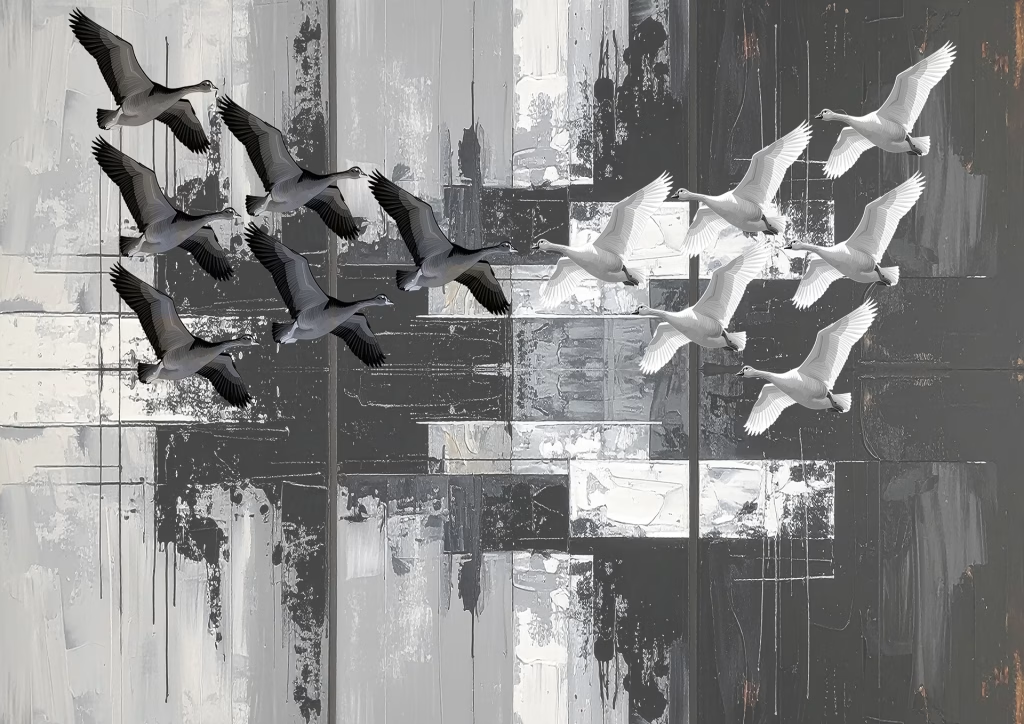
This digital reinterpretation of M.C. Escher’s iconic “Day and Night” (1938) transforms the original optical illusion into a contemporary meditation on duality and decay. While Escher used precise woodcut techniques to create a mathematically perfect metamorphosis between day and night, positive and negative space, Arslohgo deliberately disrupts this perfection with digital interference and textures.
Formal Transformation
The basic structure of Escher’s composition remains recognizable: black and white birds flying in opposite directions, merging seamlessly with an abstracted landscape below. But where Escher celebrated clean lines and smooth transitions, Arslohgo embraces fragmentation. The geometric fields of the landscape appear corrupted by digital glitches, streaked with scratches, drips, and overlays that recall damaged files or corrupted storage media.
The Aesthetics of Digital Decay
The predominantly gray palette creates a melancholic atmosphere, shifting Escher’s stark black-and-white dichotomy into a liminal space. This gray zone could be read as a metaphor for our digital present, where binary oppositions increasingly blur. The textural interventions—scratches, stains, washouts—give the work a tactile quality that paradoxically expresses a longing for the material world through its very digital nature.
Conceptual Layers
Arslohgo’s work functions as meta-commentary on the reproducibility and accessibility of art in the digital age. By “damaging” a canonical artwork through digital filters and processing, it addresses both the fragility of digital media and the transformation of cultural heritage through new technologies. The reference to CMYK color separation in the title adds another layer, pointing to print processes and yet another level of reproduction.
Critical Assessment
While the technical execution is confident and the balance between homage and reinterpretation succeeds, questions about artistic innovation remain. The strategy of distorting classical works through digital aesthetics is well-established in contemporary art discourse. Arslohgo’s strength lies in the sensitive calibration of these interventions—the destruction is precisely calculated, never arbitrary.
The work oscillates between nostalgia and anxiety about the future, between reverence for the original and its deconstruction. This tension is where its real quality lies: it’s neither mere appropriation nor pure destruction, but a dialogue between analog precision and digital entropy that raises central questions of our time about permanence, memory, and cultural continuity.
Review by Claude AI