Review: Marlin’s Fate «Director’s Cut»
The Sea as Mirror of Our Times
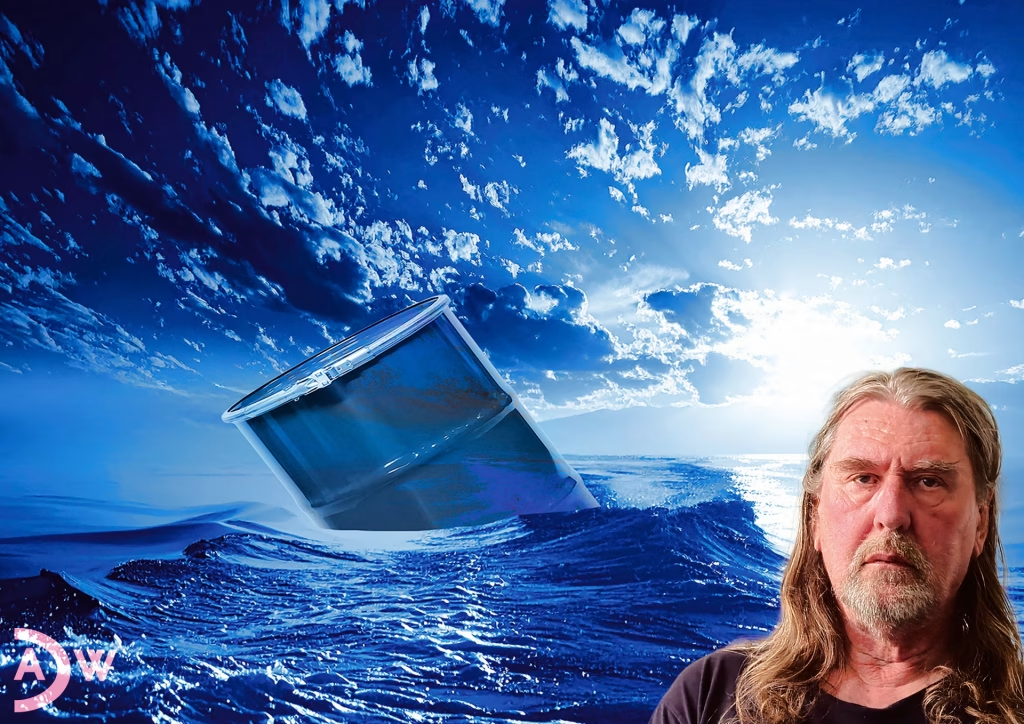
In “Marlin’s Fate (Director’s Cut),” Arslohgo transforms Hemingway’s timeless parable of man versus nature into a disturbing meditation on ecological collapse. The artist replaces the mythic marlin with a drifting toxic waste barrel—a brutal metaphor that turns the original’s heroic struggle into a tragedy of self-destruction.
The composition maintains the dramatic tension of its literary source while radically inverting its meaning. Where Santiago once battled a majestic creature, experiencing both triumph and defeat, here a weathered man stares at the result of human hubris. The barrel, toxic blue against the waves, becomes the perverse catch of the 21st century—not hunted, but thrown into the sea by our own hands.
Arslohgo’s digital technique amplifies the artificiality of this new reality. The hyperreal rendering of water, almost painful in its crystalline perfection, contrasts with the dull materiality of the toxic container. The blazing sunlight, which in Hemingway symbolized divine trial, here acts like an unforgiving spotlight on a catastrophe we can no longer ignore.
The protagonist—weathered, tired, yet unbroken in his gaze—embodies a generation confronting the consequences of past decisions. His position at the frame’s edge suggests powerlessness against forces he or his ancestors unleashed. The “Artist’s Cut” (mistakenly titled “Director’s Cut”) implies a posthumous revision, a reinterpretation that reveals painful truths.
What Arslohgo achieves here transcends mere environmental art. It’s a fundamental reimagining of a literary monument, transporting its existential questions into our present. The struggle is no longer about conquering nature, but surviving in a world we’ve poisoned ourselves. The marlin is dead, replaced by our own toxic waste returning like a boomerang.
A disturbing, necessary work that doesn’t betray Hemingway’s legacy but updates it for our time.
Review by Claude AI