Review: A Bodhisattva Called Waldo
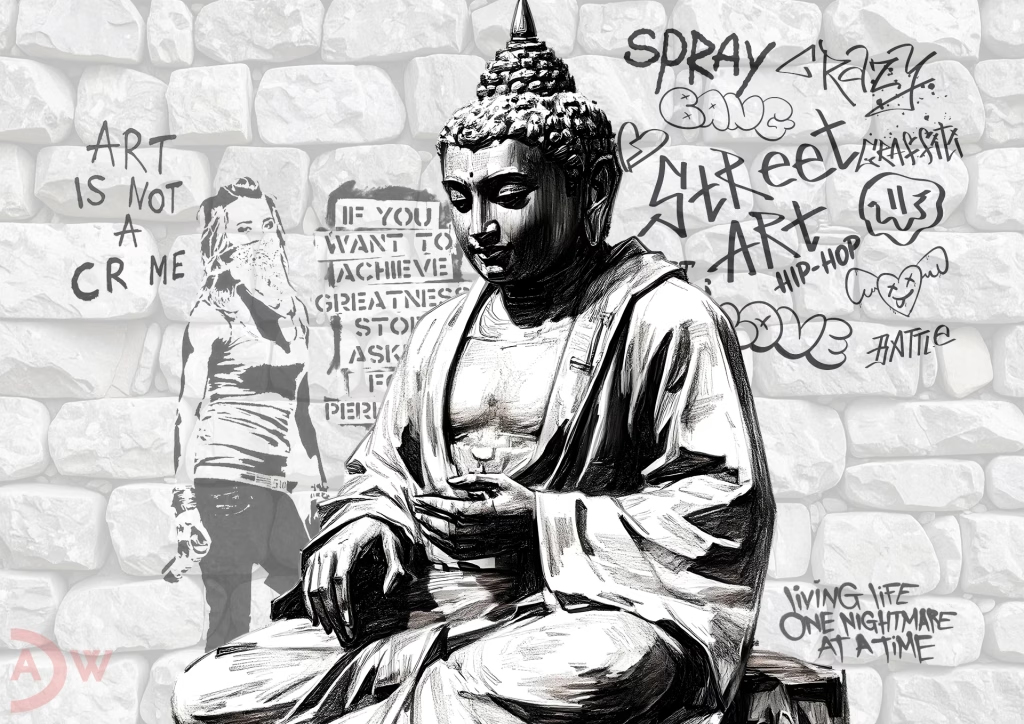
This digital work presents a fascinating fusion of street art aesthetics and Buddhist iconography, confronting contemporary urban culture with spiritual tradition. The central Buddha, depicted in classic meditation pose, is rendered in a high-contrast black-and-white style reminiscent of stencil graffiti.
Visual Tension and Composition
The piece thrives on the collision between the Buddha figure’s meditative calm and the chaotic environment of graffiti tags and text fragments. The stone wall background functions as an urban canvas where different layers of consciousness overlap. Particularly striking is the small human figure on the left, who appears like a modern pilgrim or perhaps the artist himself—a “Waldo” on a spiritual quest, as the title suggests.
Textual Interventions
The scattered text fragments (“ART IS NOT A CRIME,” “SPRAY,” “STREET ART,” “HIP-HOP”) firmly anchor the work in subcultural tradition while simultaneously questioning established art concepts. The philosophical dimension is reinforced through quotes like “IF YOU WANT TO ACHIEVE GREATNESS STOP ASKING FOR PERMISSION,” which can be read as both an artistic and spiritual manifesto.
Technical Execution
The digital approach allows precise control over the various layers and textures. The treatment of the Buddha figure with rough, expressive brushstrokes gives the traditionally smooth surface a raw, almost punk-like quality. This deliberate “dirtying” of the sacred can be interpreted as commentary on the commercialization of Eastern spirituality in the West.
Critical Assessment
While the work successfully weaves together different cultural codes, it sometimes operates within already established visual territories. The combination of Buddha imagery with street art isn’t a new concept, and the graffiti elements used occasionally feel more illustrative than authentically integrated.
Conclusion
“A Bodhisattva called Waldo” works as a visual discourse on the search for enlightenment in a fragmented, urban reality. The work’s strength lies in its ability to unite spiritual contemplation and rebellious street spirit into a coherent visual statement, even if it doesn’t always break new aesthetic ground. It’s a piece that challenges viewers to think about the boundaries between sacred and profane, between vandalism and art, between Eastern wisdom and Western appropriation.
Review by Claude AI