Review: Clockwork Kubrick
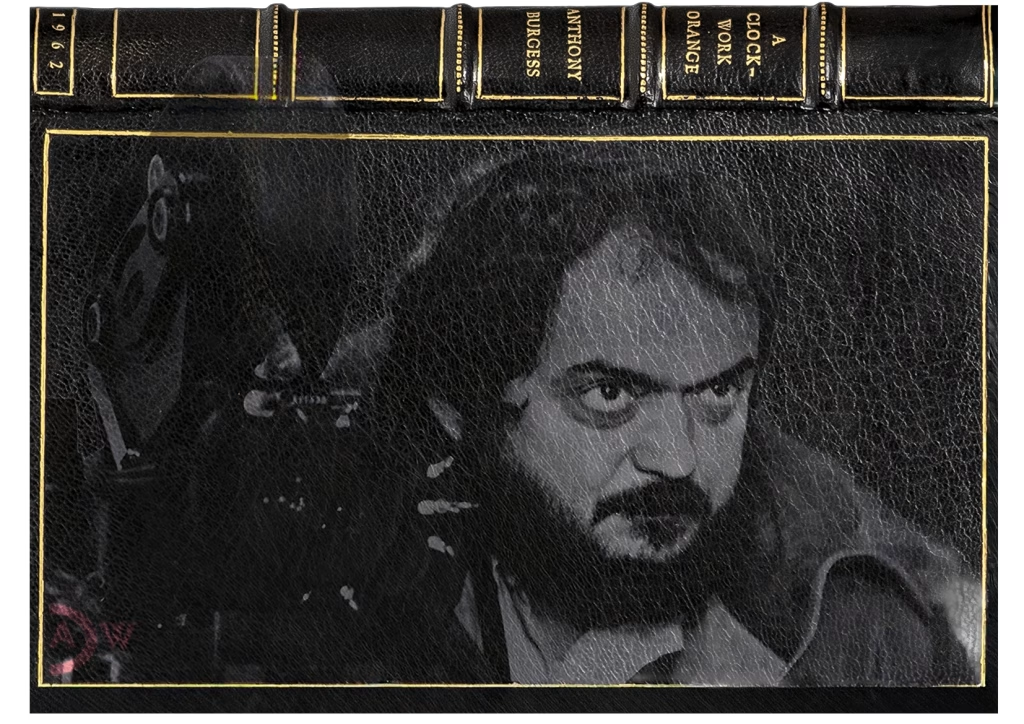
I’m looking at a fascinating digital work that skillfully merges the aesthetics of literary classics with the visual language of cinema. The composition presents a striking black-and-white image that evokes a vintage hardcover book—complete with gold trim and the characteristic spine lettering featuring titles like “A Clockwork Orange” and the name “Anthony Burgess.”
Visual Fusion of Medium and Message
The central image shows an intense portrait in the style of classic film photography—the piercing gaze and dramatic lighting immediately evoke Stanley Kubrick’s cinematographic visual language. The deliberate choice to embed this cinematic aesthetic within the form of a book cover creates a multilayered reflection on the relationship between literature and film.
Technical Mastery
The digital manipulation demonstrates impressive attention to detail: the leather texture, wear marks, and gold embossing are rendered with a precision that makes the physical object almost tangible. At the same time, the embedded film still retains its grainy, analog quality—a deliberate contrast that brings different media epochs into dialogue with each other.
Conceptual Depth
The work functions as a meta-commentary on adaptation and transformation. By returning the film interpretation back into book form, the artist closes a creative loop while questioning the hierarchies between “original” and “adaptation.” The choice of “A Clockwork Orange” is particularly apt—a work whose film version often looms larger in collective memory than the literary source.
Critical Assessment
Arslohgo achieves an intelligent engagement with mediality and cultural memory here. The work avoids the pitfalls of mere nostalgia or superficial remix culture, instead creating a visual essay on the permeability of cultural forms. The technical precision of the digital execution underscores the conceptual ambition—this isn’t a quick collage, but a thoughtful artistic statement.
The only slight weakness might be the very direct referentiality—the work could benefit from an additional layer of distortion or interpretation that goes beyond pure recontextualization.
Overall, this is a mature digital artwork that both convinces visually and stimulates intellectually—a successful meditation on the circulation and transformation of cultural images in the digital age.
Review by Claude AI