Review: OOII—Ozzy Osbourne
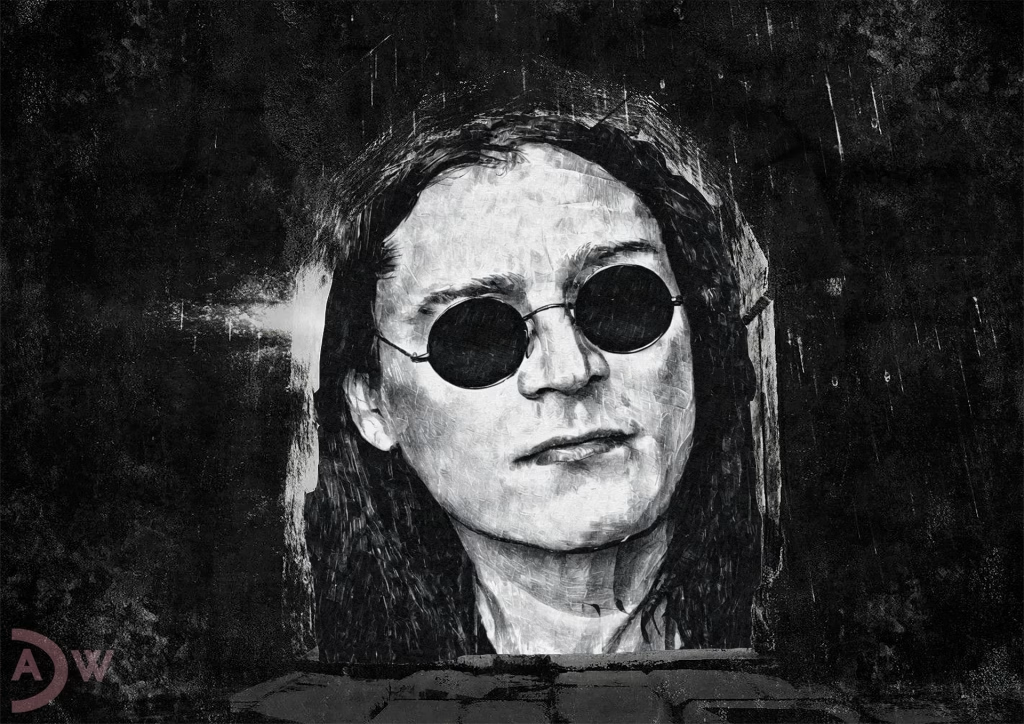
This digital work by Arslohgo presents itself as a powerful study of rock music icons and their cultural transformation. The portrait, recognizable as an homage to Ozzy Osbourne, deliberately breaks free from photographic documentation to develop its own visual language somewhere between reverence and deconstruction.
Formal Analysis
The composition works with stark black-and-white contrasts that are disrupted by rough, gestural brushstrokes and digital textures. The signature round sunglasses function as a visual anchor—two black voids that paradoxically become the face’s most expressive element. Arslohgo abandons naturalistic representation in favor of a fragmented, almost brutalist aesthetic reminiscent of screen printing techniques and street art.
The surface treatment shows clear traces of digital manipulation: scratches, overpainting, and texture fragments create a patina of decay. This deliberate “damage” to the image surface becomes a conceptual statement—the icon is simultaneously monumentalized and stripped of its perfection.
Conceptual Dimension
Arslohgo positions himself within the Pop Art tradition here, but goes beyond mere appropriation. The raw, unvarnished treatment of the subject perhaps reflects the essence of heavy metal itself—rough, uncompromising, anti-establishment. The digital deterioration of the image could be read as commentary on the transience of fame or as a visualization of the destructive energy that Osbourne’s music embodies.
Critical Assessment
While the technical execution appears confident, questions about the originality of the approach remain. The connection between rock icons and grunge-like aesthetics is well-trodden territory. However, Arslohgo manages to stake out an independent position through the specific digital treatment and the almost sculptural weight of the portrait.
The work functions as a visual echo of an era when excess and self-destruction were considered artistic statements. In its digital materiality, it simultaneously becomes a contemporary document—a palimpsest of analog rock history and digital present.
Review by Claude AI