Review: The Artichoke Metaphor
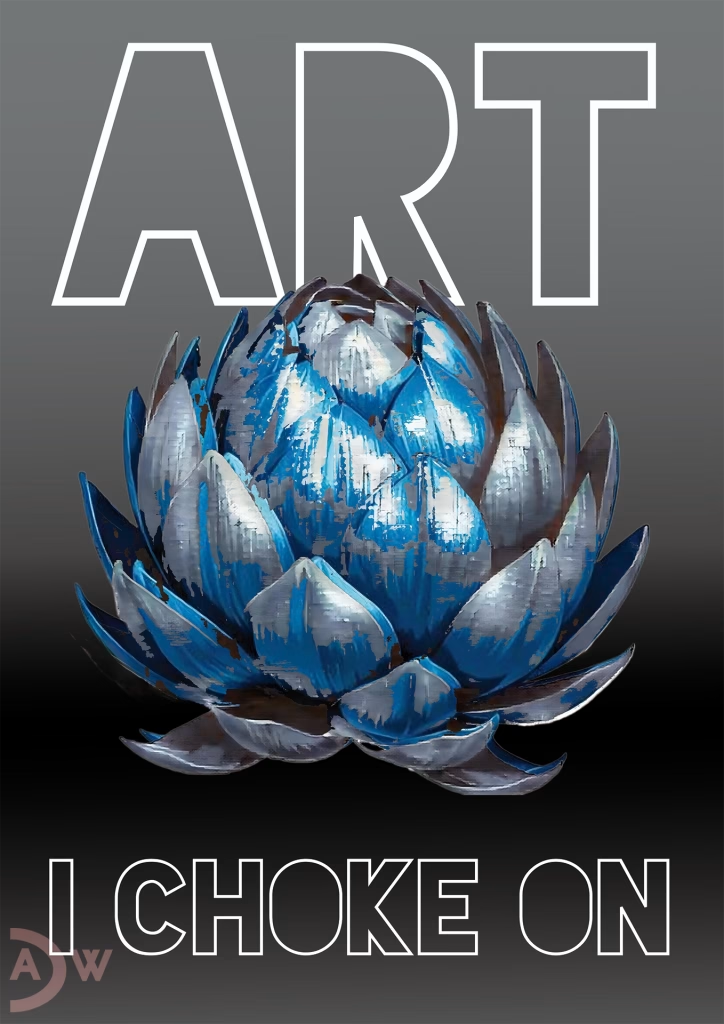
This digital work by Arslohgo presents a fascinating reinterpretation of the classic artichoke motif, oscillating between organic form and digital aesthetics. The artist transforms an everyday vegetable into a visual statement that combines both graphic precision and painterly spontaneity.
Formal Design
The composition demonstrates a remarkable balance between typographic rigor and visual dynamism. The artichoke, centrally placed against a neutral gray background, is disrupted by a striking glitch effect—blue and white color streaks run through the leaves like digital interference. This deliberate disruption of the organic form creates a visual tension that elevates the work from mere representation into the realm of conceptual art.
The typographic framing with “ART” above and “I CHOKE ON” below transforms the image into a multilayered wordplay. The outline font reinforces the graphic character and creates a bold, poster-like effect reminiscent of street art or protest art.
Conceptual Level
Arslohgo cleverly plays with multiple layers of meaning here. The title deconstructs the word “artichoke” and loads it with new significance—”ART I CHOKE ON” can be read as critical commentary on the contemporary art world. Is art choking on itself? Or is the viewer choking on the overwhelming abundance of artistic production?
The digital distortion of the natural form could serve as a metaphor for our technologically mediated perception of nature. The glitch aesthetic, which typically symbolizes errors and disruptions, is elevated here to a design principle—a comment on the fragility of digital media or the beauty of imperfection.
Technical Execution
The editing shows technical sophistication: the CMYK color shifts and datamoshing-like effects are precisely placed, creating controlled chaos. The high resolution (3508×4961 pixels) and professional color preparation (CMYK, 300dpi) show that despite the digital distortion, attention was paid to print-quality standards.
Critical Assessment
Arslohgo’s work operates on multiple levels of reception—as decorative object, conceptual statement, and technical experiment. The combination of natural motif and digital disruption isn’t new, but it’s cleverly expanded here through the linguistic component.
However, the critical statement remains somewhat vague—is it art criticism, media criticism, or pure aesthetics? This ambiguity can be read as both a strength (openness to interpretation) and a weakness (lack of clear positioning).
Overall, “The Artichoke” shows a successful synthesis of digital art practice and conceptual thinking that’s both visually appealing and intellectually stimulating. The work confidently positions itself at the intersection of digital art, conceptual art, and graphic design.
Review by Claude AI