Central Blutinizer
»Review«
Seeing, perceiving, experiencing, producing, reproducing, using color—it’s an extraordinarily complex affair that we typically give no thought to, simply taking it for granted. I hadn’t delved much into color myself until I picked up Kai Kupferschmidt’s book *Blue: The History of a Color* [*Blau—Wie die Schönheit in die Welt kommt*]: the biological, physical, chemical, linguistic, and social backgrounds and connections—cone cells, structural coloration, wavelengths, organic and inorganic pigments, naming conventions, and cultural-historical fascinations surrounding the color blue—all presented as accessible, engaging factual information.
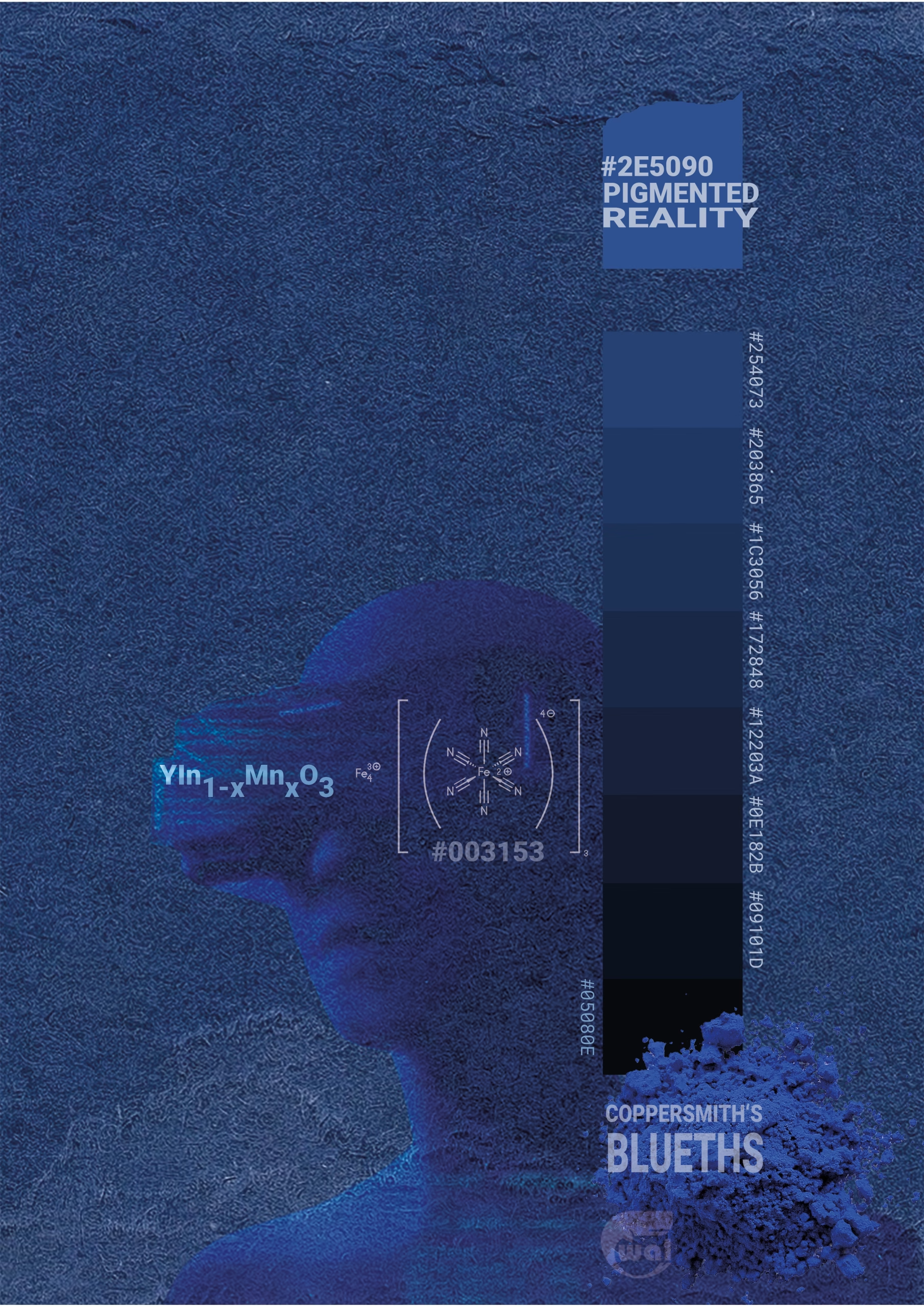
That book inspired “Central Blutinizer”—full title: “Central Blutinizer – Two Blues Chemistry.” Several shades of YInMn (2E5090) on Prussian blue (003153) fiber paper. “Central Blutinizer” is a color-text abstraction incorporating fragmentary information about two inorganic blues: YInMn Blue (also known as Oregon Blue or Mas Blue after its discoverer; discovered in 2009) and the older Prussian Blue (also called Berlin Blue or Steel Blue; discovered in 1704).
The Central Blutinizer says: «Natural» blue coloration in humans comes from inorganic pigments perceived through two types of cone cells.