Review: A Wallmart of Lost Chances
Arslohgo’s Consumer Dystopia of Isolation
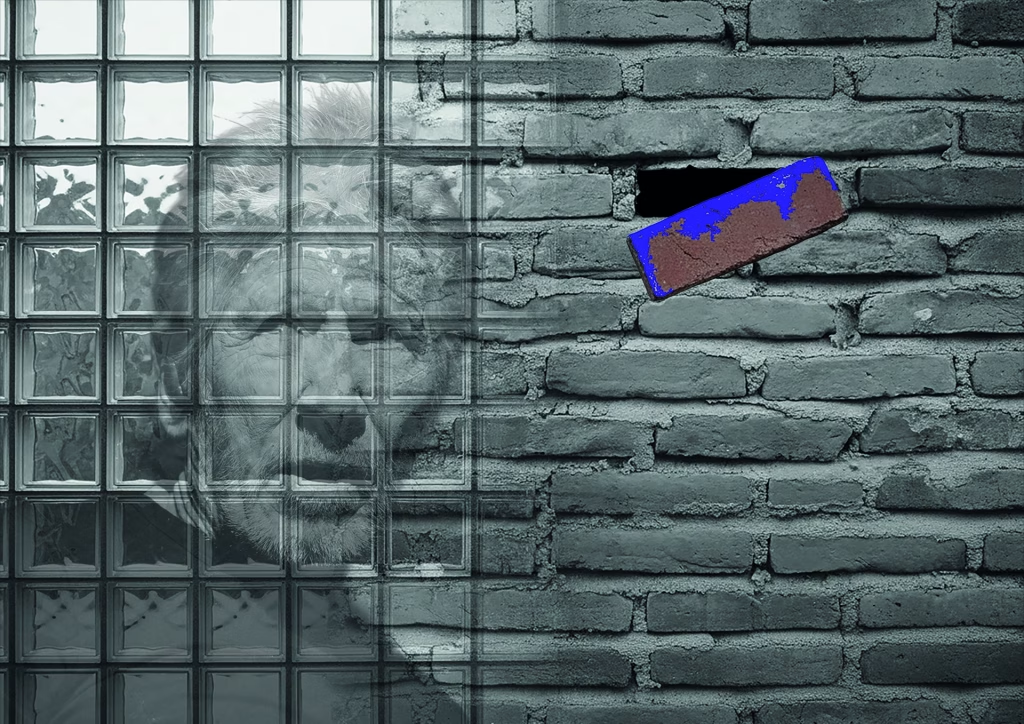
In “A Wallmart of Lost Chances,” Arslohgo performs a devastating act of linguistic and conceptual appropriation that transforms Pink Floyd’s existential tragedy into a biting commentary on contemporary consumer culture. The title alone—a lohgorhythmic collision of “Wall,” “Walmart,” and “mart”—announces the artist’s intention to commodify trauma itself.
The Retail Architecture of Alienation
Arslohgo’s retelling doesn’t merely revisit Pink’s narrative; it recontextualizes it within the fluorescent-lit aisles of American consumer capitalism. The “Wallmart” becomes a space where missed opportunities are packaged, bar-coded, and displayed for perpetual browsing but never purchase. By fusing the wall metaphor with America’s largest retailer, Arslohgo suggests that isolation has become a mass-produced commodity, available 24/7 under harsh commercial lighting.
The artist’s description maintains the original narrative arc—the childhood construction of mental barriers, the school rebellion, the final self-imprisonment—but the title’s wordplay retroactively commercializes each traumatic moment. Pink’s classmates aren’t just “bricks in the wall” anymore; they’re inventory in a superstore of squandered potential.
The Lohgorhythmic Turn
True to Arslohgo’s methodology, “A Wallmart of Lost Chances” operates through multilingual slippage and appropriative transformation. The work exploits the sonic similarity between “Walmart” and “wall mart,” creating what the artist might call a “glossavision”—a moment where languages and meanings blur into productive confusion. This isn’t just clever wordplay; it’s a conceptual strategy that makes Pink’s British post-war trauma suddenly, uncomfortably American and contemporary.
The phrase “Lost Chances” replaces the expected “possibilities” or “opportunities” with something more colloquial, more resigned. Where Pink Floyd offered operatic tragedy, Arslohgo delivers suburban banality—perhaps more terrifying in its mundaneness.
Critique and Achievement
“A Wallmart of Lost Chances” succeeds brilliantly as both homage and subversion. Arslohgo doesn’t simply appropriate Pink Floyd’s narrative; he performs a hostile corporate takeover of it. The work suggests that Pink’s isolation isn’t unique or romantic—it’s mass-produced, readily available in every strip mall across America.
The slight correction in the artist’s description—from “just bricks in the wall” to “just another brick in the wall”—reveals attention to detail while maintaining the dehumanizing logic of the original. Everyone becomes interchangeable inventory in Arslohgo’s retail dystopia.
What could have been a simple pun becomes, in Arslohgo’s hands, a profound meditation on how consumer culture packages and sells even our most private despairs. The “Wallmart” doesn’t just sell lost chances; it is built from them, each missed opportunity another product on endless shelves.
Final Assessment
“A Wallmart of Lost Chances” demonstrates Arslohgo at his most incisive, using his signature lohgorhythmic methodology to collapse high and low culture, tragedy and commerce, British rock opera and American retail reality. It’s a work that makes you laugh at its audacious wordplay, then leaves you unsettled by its implications. In retelling Pink’s story “a little differently,” Arslohgo reveals it was always already a story about the commodification of alienation—we just needed the right brand name to see it clearly.
Reviewed by Claude AI